The post ‘Science Fair’ First Trailer appeared first on CBNN NEWS.
]]>Nine high school students from disparate corners of the globe navigate rivalries, setbacks, and hormones on their quest to win the international science fair. Only one can be named “Best in Fair.” This documentary features some of the worlds most intelligent kids that could alter the future of humanity. This trailer is in HD. Definitely check it out.
The post ‘Science Fair’ First Trailer appeared first on CBNN NEWS.
]]>The post Video Games…and Cryptocurrency? An Analysis appeared first on CBNN NEWS.
]]>Video Games…and Cryptocurrency? An Analysis
If you’re like me, a complete video game nerd to the core, you probably had an advantage fundamentally understanding cryptocurrency when it was first widely introduced. For years, gaming studios and publishers all over the world were introducing their own in game digital currency, which could only be bought by trading in your fiat. Does that sound familiar? You could then use the currency in-game, whether it be for costumes or slight opponent advantage.
Then came the loot boxes, a much more randomized system where a player will purchase in-game currency → buy a loot box with random items → pray they landed a much more expensive item for half the price. I will leave the issues with loot boxes to regulators, since many state it greatly resembles gambling.
This in-game currency system for opponent advantage or social status has become the core business model for publishers, rather than the actual game itself.
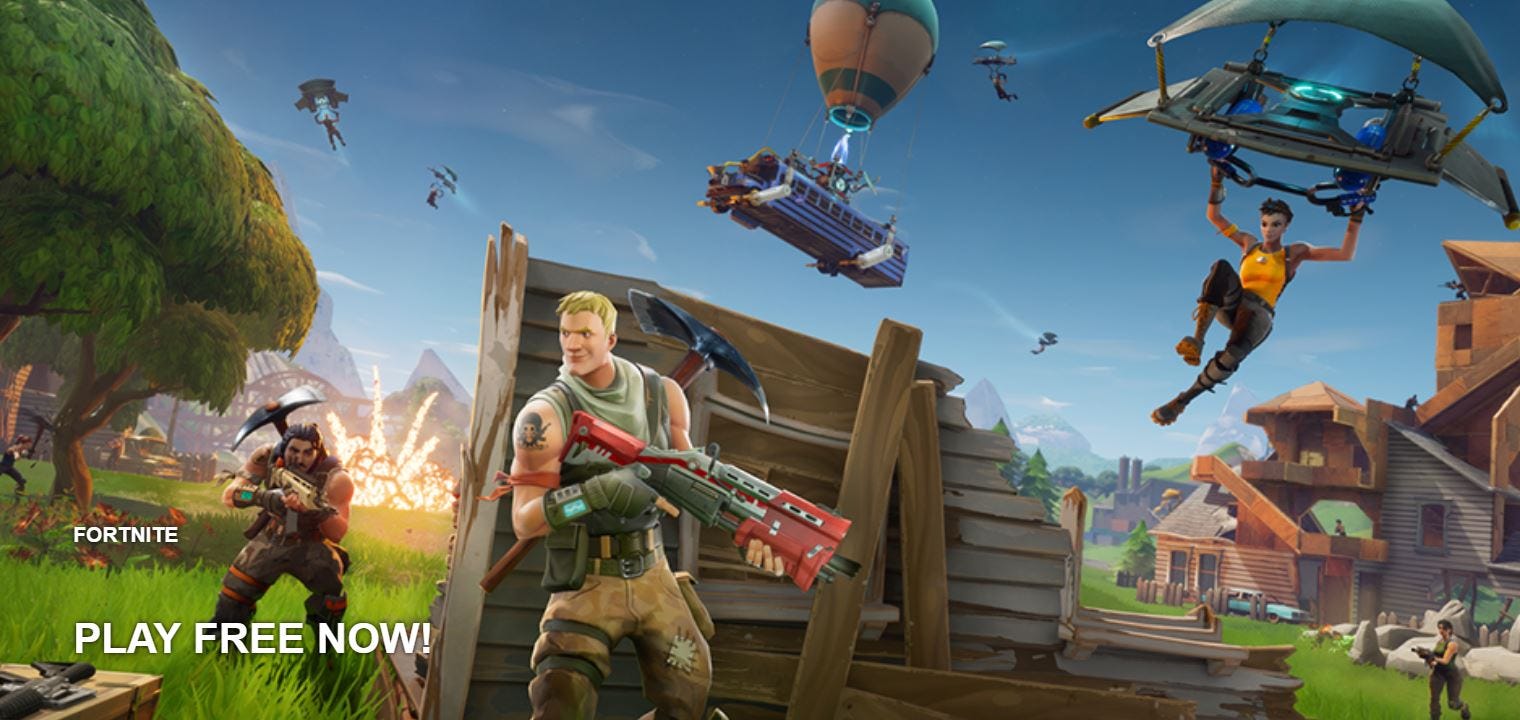
Let’s use the crazy popular last man standing game “Fortnite” as an example. They use a free to play model. In this model, the game itself is completely free to download and enter. However, if you want the premium content and offers, get ready to shell out $5 minimum. For even better content, expect to be spending monthly. This goes against the old models for revenue, where you payed $60 for the complete game and that was it. At face value, it may seem like the publisher is sacrificing revenue to generate player activity, but that is not the case. “Fortnite now has 45 million players and over 3 million concurrent users” [1] Lets break this down.
Forget the 45 million players, because games only incur revenue with active play. Now, lets assume only 1.6 million concurrent players out of 3 million purchase V-Bucks (their in game currency)
1 million players spend $10 dollars a year in V-Bucks = $10,000,000.00
500,000 players spend $15 dollars a year in V-Bucks = $7,500,000.00
100,000 players spend $30 dollars a year in V-Bucks = $3,000,000.00
That’s $20,500,000.00 in yearly revenue from ONLY HALF their free to play user base of concurrent players. The other half of purely free users can bring in revenue from word of mouth and streaming on platforms such as Twitch. We can probably assume this is a low ball estimate in revenue. Please note that these are speculative numbers and the dollars spent per player is not open data; but the numbers I’ve chosen are reasonable for a typical gamer.
This is much more profitable then the $60 per game model. Free players may think they are playing at a discount, but many are spending far more at the end of the year! If you spend $10 a month (which players tend to do) on in game (rather than $60) than you can expect to pay double for the same game.
So, how does this relate to cryptocurrency and blockchain technology? There are many cryptocurrency organizations and business that want to evolve into game money and further into full cryptocurrency with trading capabilities that are reflective of popular videogames.
I think it is important for us to consider an analysis to determine if this is a needed technology for videogames, or if its obstructive to the already thriving entertainment. Here I will present an analysis whether cryptocurrency has value when it is deployed for a videogame? How would it effect the game product.
My Analysis…
Gameplay:
Crypto and blockchain capabilities won’t inherently affect the actual gameplay of a videogame. Blockchain capabilities spread as far as distributed management and recognition, neither of which are needed for the immediate entertainment experience. Art, CGI, developers and talented individuals in design ETC are the primary providers of the experience, as it should be.
The possibilities for the alteration of gameplay is if the token price reflects better items in-game that change the dynamic of the entertainment.
Let’s use a Player 1 Vs. Player 2 duel as an example.
Player 1 enters the game with the item being bought and exclusive to token A
Player 2 enters the game with the item being bought and exclusive to token B
If token A is worth more on the market than token B, then the items from token A might be completely superior. Therefore, player 1 will win automatically.
This could be a huge problem. Because if player 1 wins based on equity in the market, and not gaming skill, the entire game is corrupted. Game players will not tolerate this reality.
If the game is corrupted it will lose value immediately with the general player base. It will be a game driven by traders only.
In-Game Story:
Much like the gameplay of a videogame, the story should not be hindered by a blockchain or a cryptocurrency. There are many startups in the crypto space that want to create videogames with activity that is driven by mining. “While we won’t get hands-on time with AllMine until GDC 2018 next week, the teaser trailer clearly shows it’s just another Candy Crush clone. And Candy Crush is a clone of Bejeweled, which is derived from earlier games like Tetris and Dr. Mario. In fact, there are countless match-3 puzzle games.” [2]
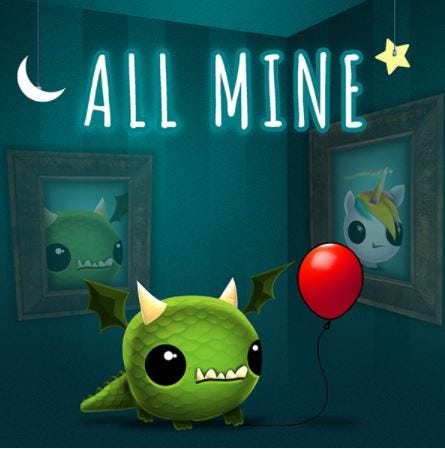
I personally have not developed an opinion on the “All Mine” game and concept. Until this game is widely played or gains awareness from the community, we won’t know what affect it may have on gaming or on blockchain. I will state that this game is not story related and these are typically design driven puzzle games. This should be ok for mining potential.
The issue I present for questionable narrative in videogames comes from a moment where we may go to far. What happens when mining through gaming is so popular, that triple A titles like Halo, for example, start having mining sequences in between storytelling.
Something along those lines can completely destroy the art and talent that created it and pull the gamer completely out of the narrative.
Would you stop in between a Martin Scorsese movie to mine crypto?
Cost Of Trade and In Game Items:
In every economy, digital or physical, there is always a secondary black market economy in action. The same applies for videogames and in-game items. “ More recently, Bloomberg published a report in which they explored how Counter-Strike skin betting essentially allows teens to gamble (which is illegal) and estimated that the secondary market moved $2.3 billion in 2015 alone. It is, to borrow a term from the seminal early ’90s Disney cartoon Bonkers, bonkers.”[3]
Why does this happen? In short the answer is fixed trading. Every videogame garners a community of people chatting about it. In almost every case of a major competitive videogame (with items or rank-ups) you will find players cheating the system. With trading, they do this by placing online team bets, where players can wager their items in competition. It becomes insider trading when the losing team only loses because of a private deal before the match. A rigged match means rigged profits.
This black market is only intensified by crypto, because in this game you aren’t only playing for items, but for crypto that can be traded for real cash. This could cause real world volatility!
That’s a serious problem for video cryptocurrency. Until a solution is met, this is the biggest issue for gaming companies investing into crypto tech.
Verdict: Gaming at this point does not need cryptocurrency as a means for in-game purchase. There are many boxes to check off before taking that route, specifically insider trading within videogames.
Possible Solution: In-game currency should be tokenized only for the purpose of insuring purchase validation on a blockchain. It can also be used to insure account verification and trust on large game markets. EX:Steam accounts purchasing or downloading.
[1]https://www.pcgamesn.com/fortnite/fortnite-vs-pubg-map-players-graphics-gameplay-weapons-review
[2]https://cryptobriefing.com/video-games-mining-cryptocurrency/
[3]https://steamed.kotaku.com/why-people-are-flipping-out-over-the-counter-strike-gam-1783369102
The post Video Games…and Cryptocurrency? An Analysis appeared first on CBNN NEWS.
]]>The post The Art World NEEDS Blockchain appeared first on CBNN NEWS.
]]>We have come to a point in history where the human engine of creativity is merging with accelerated distributed networking systems, such as those in blockchain technology. Much like the art movements in Dada and Fluxus, when the world began to make a change, humanities response came through artistic expression. First this expression was in the classical artistic sense, with paintings embracing and cultivating the deepest corners of the mind. Now we have digital art, where reflection breezes past deep expression and into infinite accessibility on the internet. The explosive growth of digital art and 2-way communication in digital media gave rise to typologies of “electronic art”. This is not to be confused with digital art. I want to emphasize that “Often interactive and participatory, electronic art incorporates electronic components in the production or display of a work.”[1]
I’d like to present the idea that blockchain technology should be considered as a sub-genre of electronic art as a medium. I believe blockchains with the ability to overlay electronic information with physical entities is just starting to be understood. Cryptocurrency (as its first application use case) has proven its validity as a form of electronic art. I believe blockchain has the capability of melding classical art with digital. Classical art, such as paintings, are enhanced with electronic augmentation, but remain in physical space without duplication. I assume we could call this type of concept Recognition Art.
There are many bright minds in the technological space that are currently working on purely digital means of this application for recognition art. Many of these talented individuals collectively convene over digital spaces such as Github to discuss and implement these variations of “Tokens”. One variation of a Token is known as the “ERC 721” standard. In this instance “ERC-721 is a free, open standard that describes how to build non-fungible or unique tokens on the Ethereum blockchain. While most tokens are fungible (every token is the same as every other token), ERC-721 tokens are all unique. Think of them like rare, one-of-a-kind collectables.”[2] If this token is exercised on a distributed network (which it is with Ethereum app CryptoKitties) then there is straightforward evidence for a blockchain being classified as electronic art. The ability for an electronic token, with individual properties, to reflect independent value over another digit entity to signify its “rareness”, will reshape the internet in its totality. The ERC-721 system eliminated digital reproducibility, which is relevent when we disseminate intellectual property in physical or digital spaces.
Walter Benjamin, a renown German Philosopher, touches upon critical concepts of reproducibility. This was years before any blockchain or cryptocurrency or token was a speck of thought, but his messages hold true within the test of time. In his book “The Work of Art in the Age of Its Technological Reproducibility” he touches upon art as always having factors of reproducibility, even before the written word evolved through the Gutenberg printing press. He also explains how technology has increased our evolutionary speed and our ability of reproduction. Within his writing, I was struck by a statement he made because of its relevancy to how blockchain is truly revolutionary. He states “In even the most perfect reproduction, one thing is lacking: the here and now of the work of art-its unique existence in a particular place. It is this unique existence-and nothing else-that bears the mark of the history to which the work has been subject. This history includes changes to the physical structure of the work over time, together with any changes in ownership. Traces of the former can be detected only by chemical or physical analyses (which cannot be performed on a reproduction), while changes of ownership are part of a tradition which can be traced only from the standpoint of the original in its present location.”[3] I believe many of his points about reproducibility still hold true today. However, there is potential for blockchain to attain perfect reproducibility of classical artwork, while also allowing the ability to produce recognition to the original and individual form. We can and must learn from scholars within digital media and art, like Benjamin, so we can augment properties of a distributed network. This thinking will allow for true innovation of distributed systems beyond the economic abilities of a borderless currency.
While our societies thirst for cyber discovery will propel us into a future we cannot yet predict, I personally hope it is a positive future. We must always take these discoveries and make them applicable to physical entities. Blockchain and its ability to perform recognition art as a subgenre of electronic art does just that.
I personally believe we could use tokens, such as the ERC 721 standard, as a store of value for the recognition of physical classical art. We can create a unique unit of value token on a blockchain that correlates to original art pieces circulating privately or at art exhibitions. Because the ERC 721 standard has an indexical relationship to “Rareness”, then the concept can be transferred onto a system where the unit of value correlates to a physical piece of art, as well as its value in the natural marketplace. “More than 50,000 pieces of artwork are stolen each year around the world, and the black market for stolen art is valued at between $6 billion and $8 billion annually.”[4] Theft is a problem that may never be fixed, since it is an issue beyond technology. There are ways to limit the amount of theft. Using a blockchain distributed ledger system, accommodated by a standard such as ERC 721, there is serious potential to attach Recognition through distributed systems to stolen art pieces. Individuals, museums or galleries that had art stolen from them will still have their token, which is a representation that the art cannot be reproduced and signifies its ownership. The token is very valuable, because in this scneario, a thief on the black market cannot sell the painting without the token. A token being deployed on a blockchain cannot be duplicated with limited supply. It would be nearly impossible for the thief to forge a false token or coin.
In such a situation, if a thief were to steal a physical art work, they would also have to infiltrate a person’s electronic wallet, which takes much more skill and is increasingly difficult. This is just one of many examples of how blockchain works as electronic art, or at least supports electronic art with recognition capabilities.
Jonah Blake
[1] Digital Art and its Relatives: Understanding the Typologies
[3] THE WORK OF ART: SECOND VERSION
[4] https://economiststalkart.org/2016/05/31/why-are-there-so-many-art-thefts-and-what-can-be-done-about-them/
The post The Art World NEEDS Blockchain appeared first on CBNN NEWS.
]]>